Galaxy Z Flip 8 First Impressions: Samsung Wants ₹1,24,999 — And I Have Questions

The Galaxy Z Flip 8 is official: ₹1,24,999 in India, a genuinely upgraded FlexWindow cover screen, and the thinnest, lightest Flip yet. But the battery hasn't grown and India gets the unproven Exynos 2600 — first impressions from the launch, before a proper hands-on.
Samsung wrapped up its Galaxy Unpacked event in London last night, and the Galaxy Z Flip 8 is officially here. Pre-orders opened immediately, and it goes on sale in India on August 8.
I've been watching Samsung's foldable line evolve since the first Flip felt more like a science project than a phone, and this launch left me with genuinely mixed feelings. There's a real, meaningful upgrade in here — and there's also a price tag that made me sit up. Let me walk through what stood out.
A note on what this is: these are my first impressions based on the launch announcement and official specs. I haven't held the device yet. A proper hands-on comes once retail units are out in India.
The Price Is the Story, Whether Samsung Likes It or Not
Let's start where every Indian buyer's eyes went first.
The Galaxy Z Flip 8 launches in India at ₹1,24,999 for 12GB + 256GB, and ₹1,44,999 for the 12GB + 512GB variant. In the US it starts at $1,199 — a full $100 more than the Flip 7.
And here's the part I find genuinely interesting: nobody's really pretending this is about added value. The widely reported explanation for the hike is rising component costs from the memory shortage — the same RAM crisis we've covered extensively on this site, the one that's already pushed up MacBooks, iPads, and half the Android lineup in India this year.
So the Flip 8 becomes another data point in a pattern I've been tracking all year: 2026 is simply an expensive year to buy premium tech, and the reason has less to do with what's in your hand and more to do with AI data centers hoovering up the world's memory supply. Samsung, notably, is one of the three companies making those memory chips. There's an irony there I'll leave alone.
What I keep coming back to is this: at ₹1.25 lakh, the Flip 8 isn't competing with other flip phones anymore. It's competing with the idea of buying a conventional flagship and a decent tablet.
The FlexWindow Is the Real Upgrade — Finally
Now the good news, and it's genuinely good.
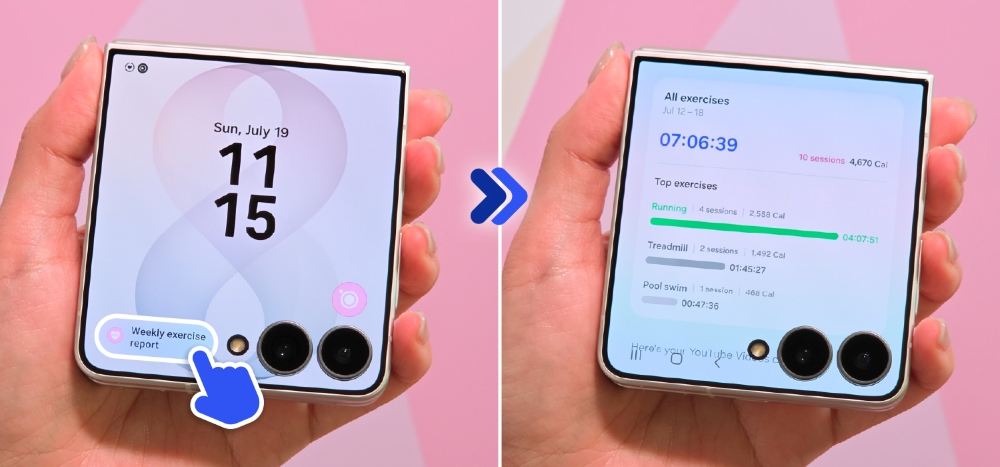
The 4.1-inch FlexWindow cover screen has been redesigned to actually run AI workflows without opening the phone. It supports apps, surfaces AI insights, and handles voice-activated automation through Gemini Intelligence.
This matters more than it sounds. The entire pitch of a flip phone is that you shouldn't have to open it for small things — checking a message, replying, controlling music, asking a quick question. For several generations, the cover screen has been a nice-looking widget shelf that eventually forced you to unfold anyway. If Samsung has genuinely made it a place where you can complete tasks rather than just start them, that changes the daily rhythm of using this phone.
Early hands-on impressions from reviewers who've handled it at the event have been positive but slightly hedged — the general sentiment being that Samsung finally gave the cover screen the upgrade it deserved, almost. That "almost" is the thing I'll be testing hardest when I get a unit.
Thinnest, Lightest — and That Genuinely Matters Here
At 180 grams and 6.1mm thick, this is the slimmest and lightest Flip Samsung has made.
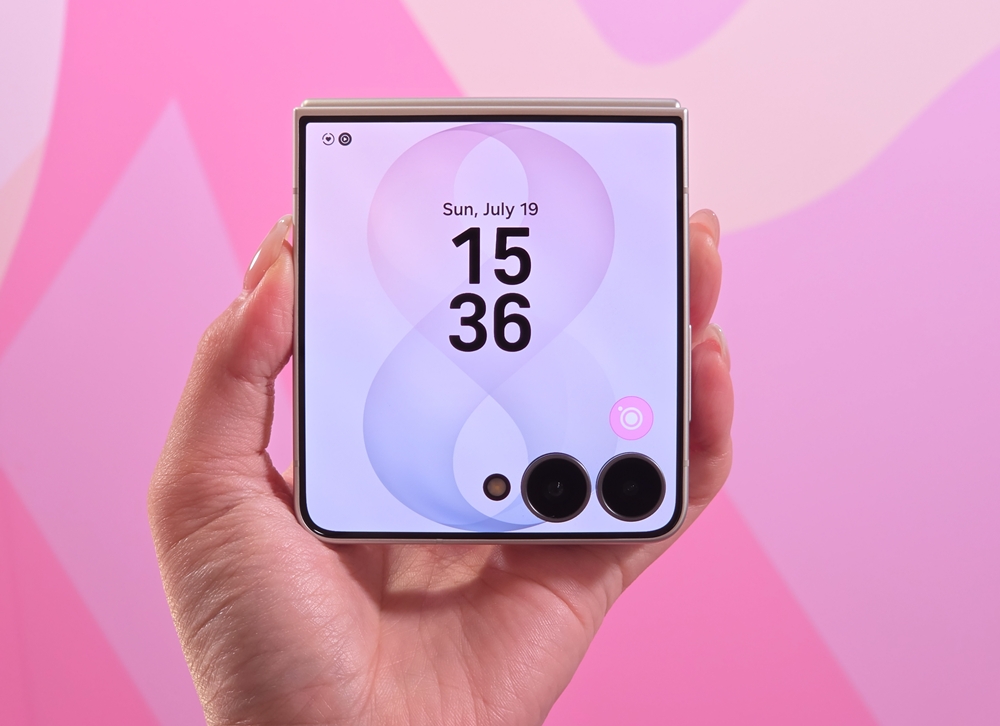
I want to flag why this isn't just spec-sheet trivia. The clamshell foldable's entire reason to exist is pocketability — it's a phone that folds down to something small. Every gram and millimetre shaved off feeds directly into the core promise of the product. A thinner Flip is a better Flip in a way that a thinner conventional slab phone often isn't.
The inner display is a 6.9-inch Dynamic AMOLED 2X with a 1–120Hz adaptive refresh rate, which is exactly what you'd want at this price.
Two Things That Bother Me
First: the battery hasn't moved. The Flip 8 carries the same 4,300mAh capacity as the Flip 7, with 25W wired charging. In a year where phones half this price are shipping 7,000mAh and 8,000mAh batteries, a ₹1.25 lakh flagship holding steady on battery is a hard sell — especially on a foldable, where battery anxiety has always been the number one complaint from actual owners.
To be fair, the 2nm Exynos 2600 could deliver real efficiency gains that make 4,300mAh go further than it used to. That's a genuine possibility and I'm not going to pre-judge it. But "trust us, it's more efficient" is a claim that needs real-world testing, not a slide at a launch event.
Second: India gets Exynos. The Flip 8 ships with Samsung's own Exynos 2600 (2nm, deca-core, up to 3.8GHz, Xclipse 960 GPU) in most markets including India — while select markets get the Snapdragon 8 Elite Gen 5 instead.
I'll be honest about my bias here: Indian buyers have been burned by Exynos-versus-Snapdragon splits before, and there's a well-earned scepticism in this market whenever we're on the Exynos side of the line. The Exynos 2600 is a genuinely new 2nm part and could well be excellent — early silicon on a new process node often is. But at ₹1.25 lakh, "could well be excellent" isn't the same as knowing. This is the single thing I most want independent benchmarks on before recommending this phone to anyone.
The Rest of the Package
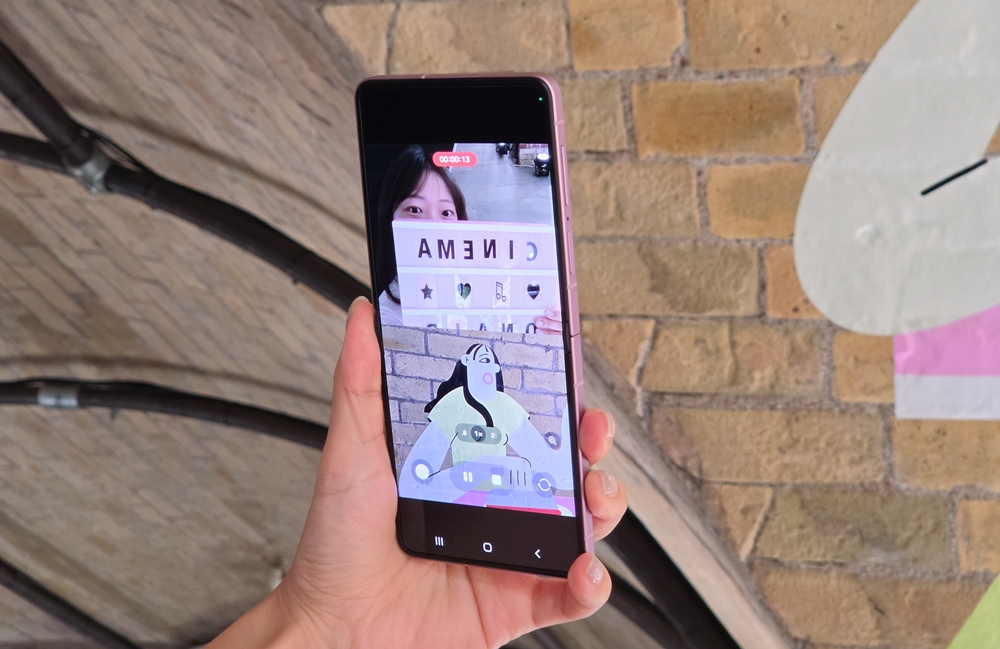
The camera setup is a 50MP main sensor (f/1.8, OIS, dual pixel autofocus, 2x optical-quality zoom) paired with a 12MP ultra-wide, and a 10MP selfie camera. Samsung is leaning on Flex Mode tricks — hands-free shooting with the phone half-folded, Super Steady stabilisation, mirror-style selfie tools. These are the features that genuinely differentiate a flip phone, and they're the ones I actually enjoy using.
It runs Android 17 with One UI 9 out of the box, which is a nice change from the usual wait.
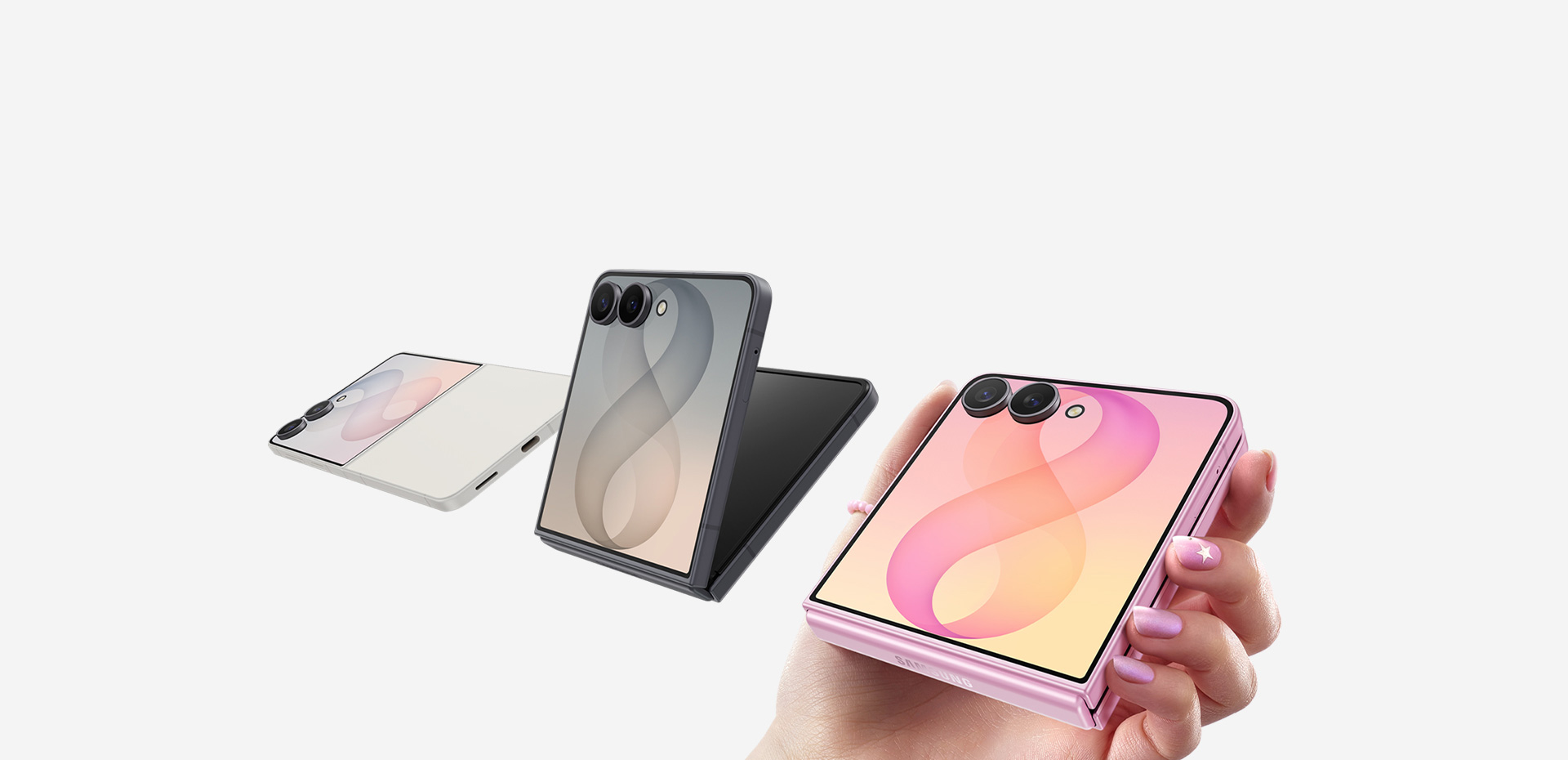
Colors are Graphite, Cream, and Pink, with a Mint option exclusive to Samsung's own online store.
Two smaller announcements I think are underrated: Smart Switch now lets iOS users transfer data wirelessly by scanning a QR code, and Quick Share now works with Apple's AirDrop. If you've ever tried to send a file between an iPhone and a Galaxy at a family gathering, you know why that's a bigger deal than it sounds.
Launch offers include a six-month Google AI Pro trial with 5TB of cloud storage, and three months of free Samsung Care+ if you buy through Samsung's site with a monthly plan.
The Bigger Shift: Three Foldables, Not Two
Worth noting the strategy change here. Samsung launched three foldables this year — the Z Flip 8, the Z Fold 8, and a new Z Fold 8 Ultra — instead of the usual two.
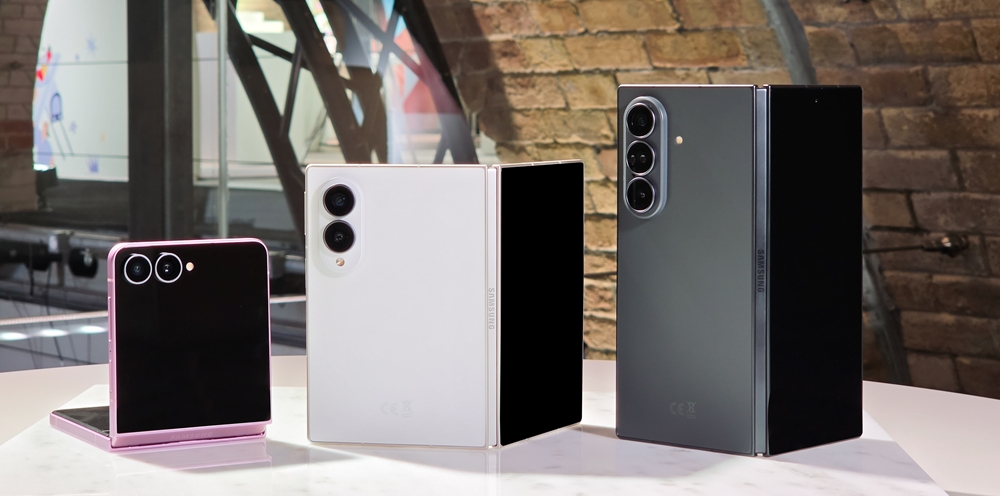
That tells me Samsung now sees foldables as a mature category worth segmenting rather than a premium experiment. For buyers, more choice is good. It also quietly puts pressure on the Flip: when there's a whole ladder of Fold options above it, the clamshell has to justify itself on being small and fun, not on being the affordable way into foldables. At ₹1.25 lakh, "affordable" isn't the word anymore.
My Take So Far
Here's where I've landed after sleeping on it.
The Galaxy Z Flip 8 looks like a genuinely better Flip than the Flip 7 in the ways that matter to how you actually use a clamshell — it's thinner, lighter, and the cover screen appears to have finally grown up. If you've been waiting for the Flip to stop feeling like a compromise, this might be the one.
But Samsung has asked for meaningfully more money while keeping the battery identical and handing India the Exynos chip. Those aren't dealbreakers on their own. Together, at ₹1,24,999, they mean this phone has something to prove rather than something to coast on.
If you already own a Flip 7, I'd sit this one out unless the FlexWindow upgrade specifically solves a frustration you have. If you're on a Flip 6 or older, this is a real generational jump and worth serious consideration. And if you're foldable-curious but not committed — wait for the independent battery and Exynos benchmarks. There's no rush; pre-order pricing rarely beats what shows up during the festive season.
I'll be back with a proper hands-on once I've lived with one. The specs tell you what a phone is. Only using it tells you whether it's any good.
Are you pre-ordering the Flip 8, or does ₹1.25 lakh feel like too much this year? Tell me what you're thinking in the comments — especially if you're on an older Flip.