Apple Watch Series 12 and Ultra 4: A Health Sensing System That Reads Your Heart Rate 60 Times More Often
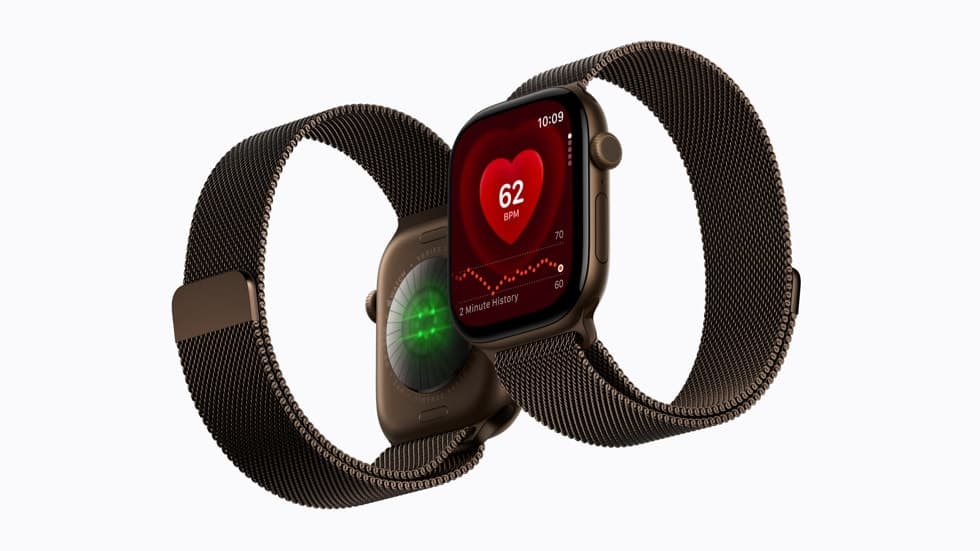
Apple Watch Series 12 starts at ₹56,900 and the Ultra 4 at ₹1,09,900 in India, both built around a redesigned Health Sensing System that reads heart rate roughly 60 times more often than last year. Here's what actually changed, and what's still just a bigger number on a spec sheet.
The Apple Watch Series 12 starts at ₹56,900 in India, and the Ultra 4 at ₹1,09,900 (₹1,24,900 for the Titanium Milanese Loop). Both are up for pre-order now, with sales starting September 18. That's the same day as the iPhone 18 Pro, from the same September 9 event that gave us the iPhone Duo and the 18 Pro line.
Unlike those two, this year's watch story isn't really about a new headline gimmick. It's about one component doing dramatically more work in the background: a redesigned Health Sensing System that Apple says reads heart rate every five seconds around the clock.
A note on what this is: first impressions from the launch announcement and official specs, not a hands-on. A full review follows once retail units are out.

The Number That's Actually New Here
Both watches get the same core upgrade: a redesigned optical heart sensor paired with a new electrical heart sensor, run by a new S11 chip. The optical sensor uses larger, more power-efficient green LEDs, and the result is heart rate sampling roughly 60 times more frequent than the Apple Watch Series 11. HRV measurements are captured up to 24 times more often too.

That's a genuinely large jump, not a rounding-error spec bump. But a bigger sampling rate is only useful if it changes something you'd actually notice or act on, and that's the part a launch announcement can't settle. More data points feeding the same algorithm doesn't automatically mean better insight. It depends entirely on what Apple's software does with all that extra information. That's the first thing worth checking once independent reviewers get units in hand.
A New Number to Watch: Readiness
Both watches introduce a Readiness score, rated 0 to 10, built from recent activity, training load, sleep, and vitals. It shows up as a simple prompt: "Pace Yourself," "Ready," or "Go For It," depending on where you land.

This lands in already-crowded territory: Garmin, Whoop, and Oura all ship some version of a daily readiness number, and the honest question for any of them is whether the score changes what you actually do that day, or just becomes one more circle to glance at and ignore. Apple folding it directly into Health rather than requiring a separate app is the one real advantage it has over the competition here.
Ultra 4: The Battery Numbers Need Two Read-Throughs
The Ultra 4 keeps its 49mm titanium case and adds the same Health Sensing System, but the number getting the most attention is battery: up to 50 hours of normal use, and up to 84 hours in Low Power Mode. A 15-minute quick charge is rated for up to 18 hours of typical use.

Worth being precise about what these numbers mean, since some outlets have already blurred them together in headlines: 50 hours is the everyday-use figure, 84 hours is specifically the low-power fallback, not a like-for-like upgrade over last year's normal-use rating. If you're deciding whether the Ultra 4 solves actual battery anxiety on a multi-day trip, the 50-hour number is the one that matters for how you'd really wear it, not the 84-hour headline.
The Ultra 4 ships in Natural and Black titanium finishes, running watchOS 27.
Sizes, Materials, Colors
The Series 12 comes in 42mm and 46mm cases, in aluminum, titanium, and a returning ceramic option, with a wide band and finish lineup including a new Dark Bronze aluminum. The S11 chip also enables new Audio Intelligence features when paired with Apple Intelligence models running on a connected iPhone and Apple's Private Cloud Compute. Worth knowing if you were picturing the watch working fully standalone: this feature needs an iPhone nearby to do anything.
Siri AI Comes Along Too, With the Same Catch
Both watches run watchOS 27, which means they're in line for Siri AI, Apple's rebuilt assistant with personal context and on-screen awareness. The catch is the same one hitting the iPhone this week: Siri AI needs a paired iPhone 15 Pro or newer, and requires joining a waitlist even once you're eligible. Buying either watch new doesn't skip that queue. It just means the watch is ready the moment your turn comes up.
Who Should Actually Care
If your current Apple Watch is a Series 8 or older, the combination of the new Health Sensing System, S11 chip, and Readiness score is a real, meaningful jump. It's not just a yearly refresh with a new case color. If you're on a Series 10 or 11, the case for upgrading rests almost entirely on whether 60x more frequent heart rate sampling changes anything you actually do with that data, which nobody outside Apple has tested yet.
For the Ultra 4, the honest pitch is narrower: if 50 hours of real battery life on a multi-day hike or dive trip solves a problem you've genuinely had, this is the watch built for that. If you don't push a watch that hard, the standard Series 12 gets you the same sensor upgrade for less than half the price.
Are you upgrading for the Health Sensing System, or waiting to see if the Readiness score is actually useful day to day? Tell us in the comments.